•  

China launches new spaceship

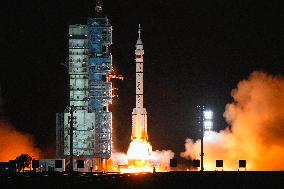
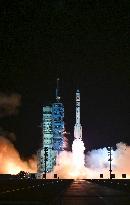
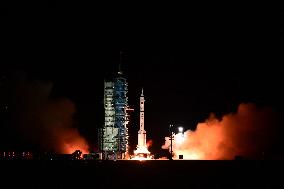
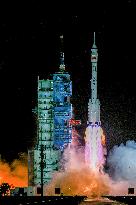
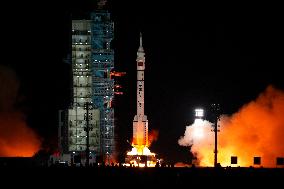
JIUQUAN, China, May 25 Kyodo - A rocket carrying China's Shenzhou-23 manned spaceship lifts off from Jiuquan Satellite Launch Center in Jiuquan, northwestern China, on May 24, 2026. (Kyodo)

  •  
China launches new spaceship

China launches new spaceship

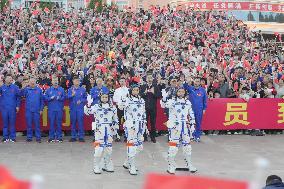
Three astronauts wave to the crowd before the launch of a rocket carrying China's Shenzhou-23 manned spaceship at Jiuquan Satellite Launch Center in Jiuquan, northwestern China, on May 24, 2026.

  •  
China launches new spaceship

China launches new spaceship

Three astronauts wave to the crowd before the launch of a rocket carrying China's Shenzhou-23 manned spaceship at Jiuquan Satellite Launch Center in Jiuquan, northwestern China, on May 24, 2026.

  •  
China launches new spaceship

China launches new spaceship

Three astronauts wave to the crowd before the launch of a rocket carrying China's Shenzhou-23 manned spaceship at Jiuquan Satellite Launch Center in Jiuquan, northwestern China, on May 24, 2026.

  •  
China launches new spaceship

China launches new spaceship

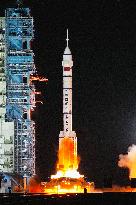
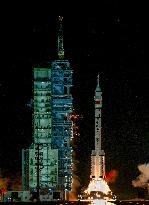
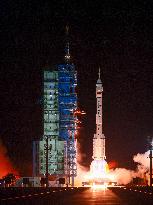
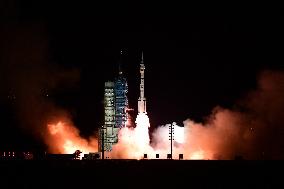
A rocket carrying China's Shenzhou-23 manned spaceship lifts off from Jiuquan Satellite Launch Center in Jiuquan, northwestern China, on May 24, 2026.

  •  
China launches new spaceship

China launches new spaceship

A rocket carrying China's Shenzhou-23 manned spaceship lifts off from Jiuquan Satellite Launch Center in Jiuquan, northwestern China, on May 24, 2026.

  •  
China Launches Shenzhou-21 Crewed Spaceship For New Scientific Goals

China Launches Shenzhou-21 Crewed Spaceship For New Scientific Goals

The Shenzhou-21 crewed spaceship, atop a Long March-2F carrier rocket, blasts off from the Jiuquan Satellite Launch Center in northwest China, Oct. 31, 2025. China launched the Shenzhou-21 crewed spaceship on Friday, sending three astronauts to its orbiting space station on a six-month mission. Photo by Lian Zhen/Xinhua/ABACAPRESS.COM

  •  
China Launches Shenzhou-21 Crewed Spaceship For New Scientific Goals

China Launches Shenzhou-21 Crewed Spaceship For New Scientific Goals

The Shenzhou-21 crewed spaceship, atop a Long March-2F carrier rocket, blasts off from the Jiuquan Satellite Launch Center in northwest China, Oct. 31, 2025. China launched the Shenzhou-21 crewed spaceship on Friday, sending three astronauts to its orbiting space station on a six-month mission. (Xinhua/Li Zhipeng)

  •  
China Launches Shenzhou-21 Crewed Spaceship For New Scientific Goals

China Launches Shenzhou-21 Crewed Spaceship For New Scientific Goals

The Shenzhou-21 crewed spaceship, atop a Long March-2F carrier rocket, blasts off from the Jiuquan Satellite Launch Center in northwest China, Oct. 31, 2025. China successfully launched the Shenzhou-21 crewed spaceship on Friday, sending three astronauts to its orbiting space station on a six-month mission. The spaceship blasted off at 11:44 p.m. (Beijing Time). About 10 minutes after the launch, the spaceship separated from the rocket and entered its designated orbit. The astronauts are in good condition, and the launch of the Shenzhou-21 crewed spaceship was a complete success, according to the China Manned Space Agency (CMSA). (Photo by Wang Jiangbo/Xinhua)

  •  
China Launches Shenzhou-21 Crewed Spaceship For New Scientific Goals

China Launches Shenzhou-21 Crewed Spaceship For New Scientific Goals

The Shenzhou-21 crewed spaceship, atop a Long March-2F carrier rocket, blasts off from the Jiuquan Satellite Launch Center in northwest China, Oct. 31, 2025. China launched the Shenzhou-21 crewed spaceship on Friday, sending three astronauts to its orbiting space station on a six-month mission. (Xinhua/Ma Jinrui)

  •  
China Launches Shenzhou-21 Crewed Spaceship For New Scientific Goals

China Launches Shenzhou-21 Crewed Spaceship For New Scientific Goals

The Shenzhou-21 crewed spaceship, atop a Long March-2F carrier rocket, blasts off from the Jiuquan Satellite Launch Center in northwest China, Oct. 31, 2025. China successfully launched the Shenzhou-21 crewed spaceship on Friday, sending three astronauts to its orbiting space station on a six-month mission. The spaceship blasted off at 11:44 p.m. (Beijing Time). About 10 minutes after the launch, the spaceship separated from the rocket and entered its designated orbit. The astronauts are in good condition, and the launch of the Shenzhou-21 crewed spaceship was a complete success, according to the China Manned Space Agency (CMSA). (Photo by Wang Jiangbo/Xinhua)

  •  
China Launches Shenzhou-21 Crewed Spaceship For New Scientific Goals

China Launches Shenzhou-21 Crewed Spaceship For New Scientific Goals

The Shenzhou-21 crewed spaceship, atop a Long March-2F carrier rocket, blasts off from the Jiuquan Satellite Launch Center in northwest China, Oct. 31, 2025. China launched the Shenzhou-21 crewed spaceship on Friday, sending three astronauts to its orbiting space station on a six-month mission. Photo by Lian Zhen/Xinhua/ABACAPRESS.COM

  •  
China Launches Shenzhou-21 Crewed Spaceship For New Scientific Goals

China Launches Shenzhou-21 Crewed Spaceship For New Scientific Goals

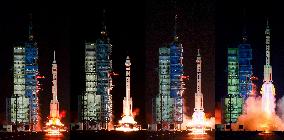
This combo photo shows the Shenzhou-21 crewed spaceship, atop a Long March-2F carrier rocket, blasting off from the Jiuquan Satellite Launch Center in northwest China, Oct. 31, 2025. China successfully launched the Shenzhou-21 crewed spaceship on Friday, sending three astronauts to its orbiting space station on a six-month mission. The spaceship blasted off at 11:44 p.m. (Beijing Time). About 10 minutes after the launch, the spaceship separated from the rocket and entered its designated orbit. The astronauts are in good condition, and the launch of the Shenzhou-21 crewed spaceship was a complete success, according to the China Manned Space Agency (CMSA). (Xinhua)

  •  
China Launches Shenzhou-21 Crewed Spaceship For New Scientific Goals

China Launches Shenzhou-21 Crewed Spaceship For New Scientific Goals

The Shenzhou-21 crewed spaceship, atop a Long March-2F carrier rocket, blasts off from the Jiuquan Satellite Launch Center in northwest China, Oct. 31, 2025. China successfully launched the Shenzhou-21 crewed spaceship on Friday, sending three astronauts to its orbiting space station on a six-month mission. The spaceship blasted off at 11:44 p.m. (Beijing Time). About 10 minutes after the launch, the spaceship separated from the rocket and entered its designated orbit. The astronauts are in good condition, and the launch of the Shenzhou-21 crewed spaceship was a complete success, according to the China Manned Space Agency (CMSA). (Xinhua/Li Minggang)

  •  
China Launches 3 Astronauts To Tiangong Space Station

China Launches 3 Astronauts To Tiangong Space Station

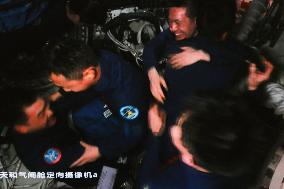
This image captured at Beijing Aerospace Control Center on Oct. 30, 2024 shows the crew of Shenzhou-18 manned spaceship greeting the crew of Shenzhou-19 manned spaceship. The three astronauts of China's Shenzhou-19 spaceflight mission have entered the Tiangong space station and met with another astronaut trio on Wednesday, starting a new round of in-orbit crew handover. The Shenzhou-18 crew opened the hatch at 12:51 p.m. (Beijing Time) and greeted the new arrivals, according to the China Manned Space Agency (CMSA). The six crew members then took group pictures for the fifth space get-together in China's aerospace history. They will live and work together for about five days to complete planned tasks and handover work, the CMSA said. The Shenzhou-18 crew is scheduled to return to the Dongfeng landing site in north China on Nov. 4. Photo by Han Qiyang/Xinhua/ABACAPRESS.COM

  •  
XINHUA PHOTOS OF THE DAY

XINHUA PHOTOS OF THE DAY

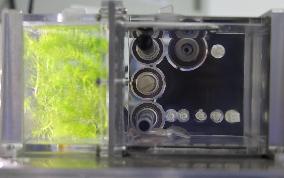
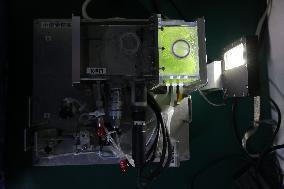
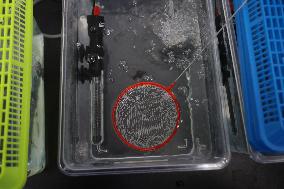
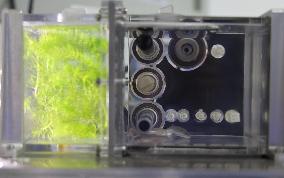
(240427) -- BEIJING, April 27, 2024 (Xinhua) -- This photo taken on April 25, 2024 shows a backup version of the aquatic ecosystem. The three taikonauts aboard China's Shenzhou-18 spaceship have entered the country's space station and met with another taikonaut trio on Friday, starting a new round of in-orbit crew handover. A unique task for the taikonauts of Shenzhou-18 is to create an "aquarium" and raise fish in zero gravity. They will create a simplified version of an aquatic ecosystem using zebrafish and algae to study how the space environment affects their growth and system balance. (Xinhua/Jin Liwang)

  •  
(EyesOnSci) CHINA-JIUQUAN-SHENZHOU-18-AQUATIC ECOSYSTEM (CN)

(EyesOnSci) CHINA-JIUQUAN-SHENZHOU-18-AQUATIC ECOSYSTEM (CN)

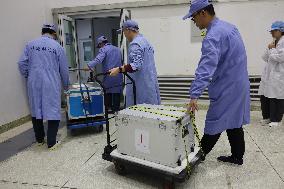
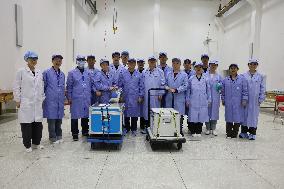
(240426) -- JIUQUAN, April 26, 2024 (Xinhua) -- Staff members transfer the integrated aquatic ecosystem sample for the Shenzhou-18 spaceflight mission at Jiuquan Satellite Launch Center in northwest China, April 25, 2024. The three taikonauts aboard China's Shenzhou-18 spaceship have entered the country's space station and met with another taikonaut trio on Friday, starting a new round of in-orbit crew handover. A unique task for the taikonauts of Shenzhou-18 is to create an "aquarium" and raise fish in zero gravity. They will create a simplified version of an aquatic ecosystem using zebrafish and algae to study how the space environment affects their growth and system balance. (Xinhua/Jin Liwang)

  •  
(EyesOnSci) CHINA-JIUQUAN-SHENZHOU-18-AQUATIC ECOSYSTEM (CN)

(EyesOnSci) CHINA-JIUQUAN-SHENZHOU-18-AQUATIC ECOSYSTEM (CN)

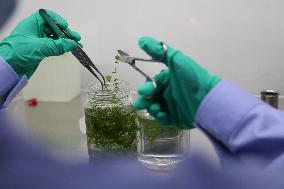
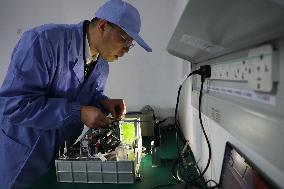
(240426) -- JIUQUAN, April 26, 2024 (Xinhua) -- A staff member processes the algae at Jiuquan Satellite Launch Center in northwest China, April 25, 2024. The three taikonauts aboard China's Shenzhou-18 spaceship have entered the country's space station and met with another taikonaut trio on Friday, starting a new round of in-orbit crew handover. A unique task for the taikonauts of Shenzhou-18 is to create an "aquarium" and raise fish in zero gravity. They will create a simplified version of an aquatic ecosystem using zebrafish and algae to study how the space environment affects their growth and system balance. (Xinhua/Jin Liwang)

  •  
(EyesOnSci) CHINA-JIUQUAN-SHENZHOU-18-AQUATIC ECOSYSTEM (CN)

(EyesOnSci) CHINA-JIUQUAN-SHENZHOU-18-AQUATIC ECOSYSTEM (CN)

(240426) -- JIUQUAN, April 26, 2024 (Xinhua) -- This photo taken on April 25, 2024 shows a backup version of the aquatic ecosystem. The three taikonauts aboard China's Shenzhou-18 spaceship have entered the country's space station and met with another taikonaut trio on Friday, starting a new round of in-orbit crew handover. A unique task for the taikonauts of Shenzhou-18 is to create an "aquarium" and raise fish in zero gravity. They will create a simplified version of an aquatic ecosystem using zebrafish and algae to study how the space environment affects their growth and system balance. (Xinhua/Jin Liwang)

  •  
(EyesOnSci) CHINA-JIUQUAN-SHENZHOU-18-AQUATIC ECOSYSTEM (CN)

(EyesOnSci) CHINA-JIUQUAN-SHENZHOU-18-AQUATIC ECOSYSTEM (CN)

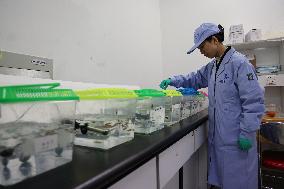
(240426) -- JIUQUAN, April 26, 2024 (Xinhua) -- A staff member observes the condition of the zebrafish for backup at Jiuquan Satellite Launch Center in northwest China, April 25, 2024. The three taikonauts aboard China's Shenzhou-18 spaceship have entered the country's space station and met with another taikonaut trio on Friday, starting a new round of in-orbit crew handover. A unique task for the taikonauts of Shenzhou-18 is to create an "aquarium" and raise fish in zero gravity. They will create a simplified version of an aquatic ecosystem using zebrafish and algae to study how the space environment affects their growth and system balance. (Xinhua/Jin Liwang)

  •  
(EyesOnSci) CHINA-JIUQUAN-SHENZHOU-18-AQUATIC ECOSYSTEM (CN)

(EyesOnSci) CHINA-JIUQUAN-SHENZHOU-18-AQUATIC ECOSYSTEM (CN)

(240426) -- JIUQUAN, April 26, 2024 (Xinhua) -- Researcher Wang Gaohong prepares the backup version of the aquatic ecosystem at Jiuquan Satellite Launch Center in northwest China, April 25, 2024. The three taikonauts aboard China's Shenzhou-18 spaceship have entered the country's space station and met with another taikonaut trio on Friday, starting a new round of in-orbit crew handover. A unique task for the taikonauts of Shenzhou-18 is to create an "aquarium" and raise fish in zero gravity. They will create a simplified version of an aquatic ecosystem using zebrafish and algae to study how the space environment affects their growth and system balance. (Xinhua/Jin Liwang)

  •  
(EyesOnSci) CHINA-JIUQUAN-SHENZHOU-18-AQUATIC ECOSYSTEM (CN)

(EyesOnSci) CHINA-JIUQUAN-SHENZHOU-18-AQUATIC ECOSYSTEM (CN)

(240426) -- JIUQUAN, April 26, 2024 (Xinhua) -- Staff members pose for a group photo with the integrated aquatic ecosystem sample for the Shenzhou-18 spaceflight mission at Jiuquan Satellite Launch Center in northwest China, April 25, 2024. The three taikonauts aboard China's Shenzhou-18 spaceship have entered the country's space station and met with another taikonaut trio on Friday, starting a new round of in-orbit crew handover. A unique task for the taikonauts of Shenzhou-18 is to create an "aquarium" and raise fish in zero gravity. They will create a simplified version of an aquatic ecosystem using zebrafish and algae to study how the space environment affects their growth and system balance. (Xinhua/Jin Liwang)

  •  
(EyesOnSci) CHINA-JIUQUAN-SHENZHOU-18-AQUATIC ECOSYSTEM (CN)

(EyesOnSci) CHINA-JIUQUAN-SHENZHOU-18-AQUATIC ECOSYSTEM (CN)

(240426) -- JIUQUAN, April 26, 2024 (Xinhua) -- A staff member observes the condition of the zebrafish for backup at Jiuquan Satellite Launch Center in northwest China, April 25, 2024. The three taikonauts aboard China's Shenzhou-18 spaceship have entered the country's space station and met with another taikonaut trio on Friday, starting a new round of in-orbit crew handover. A unique task for the taikonauts of Shenzhou-18 is to create an "aquarium" and raise fish in zero gravity. They will create a simplified version of an aquatic ecosystem using zebrafish and algae to study how the space environment affects their growth and system balance. (Xinhua/Jin Liwang)

  •  
(EyesOnSci) CHINA-JIUQUAN-SHENZHOU-18-AQUATIC ECOSYSTEM (CN)

(EyesOnSci) CHINA-JIUQUAN-SHENZHOU-18-AQUATIC ECOSYSTEM (CN)

(240426) -- JIUQUAN, April 26, 2024 (Xinhua) -- This photo taken on April 25, 2024 shows a backup version of the aquatic ecosystem. The three taikonauts aboard China's Shenzhou-18 spaceship have entered the country's space station and met with another taikonaut trio on Friday, starting a new round of in-orbit crew handover. A unique task for the taikonauts of Shenzhou-18 is to create an "aquarium" and raise fish in zero gravity. They will create a simplified version of an aquatic ecosystem using zebrafish and algae to study how the space environment affects their growth and system balance. (Xinhua/Jin Liwang)

  •  
XINHUA PHOTOS OF THE DAY

XINHUA PHOTOS OF THE DAY

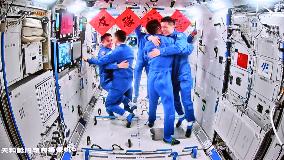
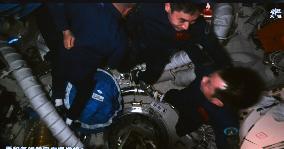
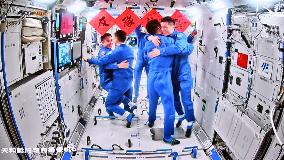
(240426) -- BEIJING, April 26, 2024 (Xinhua) -- This image captured at Beijing Aerospace Control Center on April 26, 2024 shows the astronauts of the Shenzhou-17 mission greeting the Shenzhou-18 crew at China's space station. The three astronauts aboard China's Shenzhou-18 spaceship have entered the country's space station and met with another astronaut trio on Friday, starting a new round of in-orbit crew handover. (Xinhua/Jin Liangkuai)

  •  

Shenzhou-18 astronauts enter space station

STORY: Shenzhou-18 astronauts enter space station SHOOTING TIME: April 26, 2024 DATELINE: April 26, 2024 LENGTH: 0:00:16 LOCATION: Beijing CATEGORY: TECHNOLOGY SHOTLIST: 1. the space get-together STORYLINE: The three astronauts aboard China's Shenzhou-18 spaceship have entered the country's space station and met with another astronaut trio on Friday, starting a new round of in-orbit crew handover. The Shenzhou-17 crew opened the hatch at 5:04 a.m. (Beijing Time). The three space station occupants greeted the new arrivals, and they took group pictures. The space get-together of the two crews kicked off the fourth in-orbit crew rotation in China's space station. According to the China Manned Space Agency, the six astronauts will live and work together for about 5 days to complete planned tasks and handover work. Xinhua News Agency correspondents reporting from Beijing. (XHTV)

  •  
(EyesonSci)CHINA-SHENZHOU-18-SPACE STATION-ENTERING (CN)

(EyesonSci)CHINA-SHENZHOU-18-SPACE STATION-ENTERING (CN)

(240426) -- BEIJING, April 26, 2024 (Xinhua) -- This image captured at Beijing Aerospace Control Center on April 26, 2024 shows the astronauts of the Shenzhou-17 mission greeting the Shenzhou-18 crew at China's space station. The three astronauts aboard China's Shenzhou-18 spaceship have entered the country's space station and met with another astronaut trio on Friday, starting a new round of in-orbit crew handover. (Xinhua/Jin Liangkuai)

  •  
(EyesonSci)CHINA-SHENZHOU-18-SPACE STATION-ENTERING (CN)

(EyesonSci)CHINA-SHENZHOU-18-SPACE STATION-ENTERING (CN)

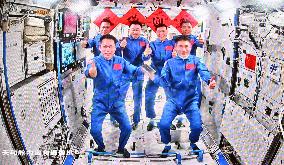
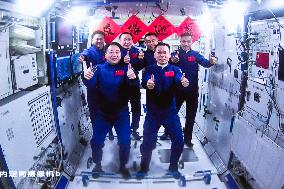
(240426) -- BEIJING, April 26, 2024 (Xinhua) -- This image captured at Beijing Aerospace Control Center on April 26, 2024 shows the Shenzhou-17 and Shenzhou-18 crew posing for a group photo inside China's space station. The three astronauts aboard China's Shenzhou-18 spaceship have entered the country's space station and met with another astronaut trio on Friday, starting a new round of in-orbit crew handover. (Xinhua/Jin Liangkuai)

  •  
(EyesonSci)CHINA-SHENZHOU-18-SPACE STATION-ENTERING (CN)

(EyesonSci)CHINA-SHENZHOU-18-SPACE STATION-ENTERING (CN)

(240426) -- BEIJING, April 26, 2024 (Xinhua) -- This image captured at Beijing Aerospace Control Center on April 26, 2024 shows the astronauts of the Shenzhou-17 mission greeting the Shenzhou-18 crew at China's space station. The three astronauts aboard China's Shenzhou-18 spaceship have entered the country's space station and met with another astronaut trio on Friday, starting a new round of in-orbit crew handover. (Xinhua/Jin Liangkuai)

  •  

See-off ceremony held for taikonauts of Shenzhou-18 mission

STORY: See-off ceremony held for taikonauts of Shenzhou-18 mission SHOOTING TIME: April 25, 2024 DATELINE: April 25, 2024 LENGTH: 0:00:30 LOCATION: JIUQUAN, China CATEGORY: SCIENCE/TECHNOLOGY SHOTLIST: 1. various of the ceremony STORYLINE: A see-off ceremony for three taikonauts of the Shenzhou-18 crewed space mission was held on Thursday at the Jiuquan Satellite Launch Center in northwest China, according to the China Manned Space Agency. At the command of Xu Xueqiang, commander-in-chief of China's manned space program, taikonauts Ye Guangfu, Li Cong, and Li Guangsu set off at 6:10 p.m. (Beijing Time). As of Thursday, the Shenzhou-17 crew has stayed in the orbiting Tiangong space station for nearly six months and is preparing for the arrival of the Shenzhou-18 crew. The Shenzhou-18 spaceship is slated to be launched at 8:59 p.m. Thursday (Beijing Time), and the new crew will stay in orbit for six months. Xinhua News Agency correspondents reporting from Jiuquan, China. (XHTV)

  •  

China to launch Shenzhou-18 crewed spaceship

STORY: China to launch Shenzhou-18 crewed spaceship SHOOTING TIME: April 24, 2024 DATELINE: April 24, 2024 LENGTH: 00:01:56 LOCATION: JIUQUAN, China CATEGORY: TECHNOLOGY SHOTLIST: 1. various of the spaceship preparing new mission 2. various of the press meeting 3. SOUNDBITE 1 (Chinese): YE GUANGFU, Commander of Shenzhou-18 crew 4. SOUNDBITE 2 (Chinese): LI CONG, Shenzhou-18 crew member 5. SOUNDBITE 3 (Chinese): LI GUANGSU, Shenzhou-18 crew member STORYLINE: The Shenzhou-18 crewed spaceship is scheduled to be launched at 8:59 p.m. Thursday (Beijing Time) from Jiuquan Satellite Launch Center in northwest China. The spaceship will carry three astronauts, Ye Guangfu, Li Cong and Li Guangsu to carry out the Shenzhou-18 spaceflight mission. The crew will stay in orbit for about six months. Ye, the commander of the mission, also participated in the country's Shenzhou-13 crewed space mission. SOUNDBITE 1 (Chinese): YE GUANGFU, Commander of Shenzhou-18 crew "There are similarities and differences in my feeling

  •  
Boeing Starliner first manned test flight

Boeing Starliner first manned test flight

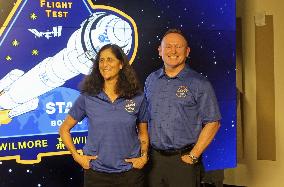
Astronauts Sunita Williams (L) and Barry Wilmore pose at Johnson Space Center in Houston, Texas, on March 22, 2024, as they are assigned to board NASA's new spaceship Boeing Starliner, developed to carry astronauts to the International Space Station, for its first manned flight test as soon as May 1.

  •  
Boeing Starliner first manned test flight

Boeing Starliner first manned test flight

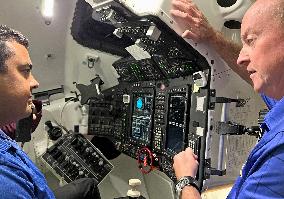
Photo taken on March 21, 2024, at Johnson Space Center in Houston, Texas, shows a simulator used by astronauts to get used to operating NASA's new spaceship Boeing Starliner, developed to carry them to the International Space Station, ahead of the spaceship's first manned flight test as soon as May 1.

  •  
Boeing Starliner first manned test flight

Boeing Starliner first manned test flight

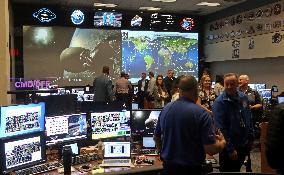
Photo taken on March 21, 2024, at Johnson Space Center in Houston, Texas, shows a control room for NASA's new spaceship Boeing Starliner, developed to carry astronauts to the International Space Station, ahead of the spaceship's first manned flight test as soon as May 1.

  •  
Boeing Starliner first manned test flight

Boeing Starliner first manned test flight

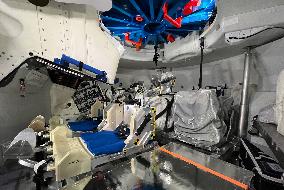
Photo taken on March 21, 2024, at Johnson Space Center in Houston, Texas, shows the interior of a training-use mockup of NASA's new spaceship Boeing Starliner, developed to carry astronauts to the International Space Station, ahead of its first manned flight test as soon as May 1.

  •  
Boeing Starliner first manned test flight

Boeing Starliner first manned test flight

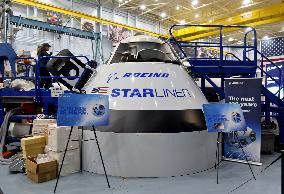
Photo taken on March 21, 2024, at Johnson Space Center in Houston, Texas, shows a mockup of NASA's new spaceship Boeing Starliner, developed to carry astronauts to the International Space Station, ahead of its first manned flight test as soon as May 1.

  •  

Russia launches Progress MS-26 cargo spaceship into orbit

STORY: Russia launches Progress MS-26 cargo spaceship into orbit SHOOTING TIME: Feb. 15, 2024 DATELINE: Feb. 16, 2024 LENGTH: 00:01:32 LOCATION: Moscow CATEGORY: SCIENCE/TECHNOLOGY SHOTLIST: 1. various of the Progress MS-26 cargo spaceship (source: Roscosmos) STORYLINE: A Russian Soyuz-2.1a rocket carrying the Progress MS-26 cargo spaceship blasted off from the Baikonur Cosmodrome in Kazakhstan and reached the designated orbit as planned, the Russian space corporation Roscosmos said on Thursday. Roscosmos said that the MS-26 lifted off at 06:25 Moscow time (0325 GMT), reached its designated orbit, separated from the third stage of the rocket, and deployed its antennas and solar panels in a normal mode. The docking of the Progress MS-26 to the Zvezda service module of the Russian segment of the International Space Station (ISS) is scheduled for Saturday at 09:12 Moscow time (0612 GMT). The cargo ship will deliver 2,518 kg of supplies to the station. Among the cargo, there are consumables for a new scient

  •  
XINHUA-PICTURES OF THE YEAR 2023-CHINA NEWS

XINHUA-PICTURES OF THE YEAR 2023-CHINA NEWS

(240105) -- BEIJING, Jan. 5, 2024 (Xinhua) -- This image captured at Beijing Aerospace Control Center on Oct. 26, 2023 shows the Shenzhou-16 and Shenzhou-17 crew posing for a group photo inside China's space station. The three astronauts aboard China's Shenzhou-17 spaceship have entered the country's space station and met with another astronaut trio on Oct. 26, 2023, starting a new round of in-orbit crew handover. (Photo by Han Qiyang/Xinhua)

  •  

Shenzhou-16 astronauts complete tasks very well: China's 1st astronaut Yang Liwei

STORY: Shenzhou-16 astronauts complete tasks very well: China's 1st astronaut Yang Liwei DATELINE: Oct. 31, 2023 LENGTH: 00:00:34 LOCATION: JIUQUAN, China CATEGORY: TECHNOLOGY SHOTLIST: 1. various of Shenzhou-16 return capsule 2. SOUNDBITE (Chinese): YANG LIWEI, China's first astronaut 3. various of astronauts leaving the return capsule STORYLINE: The return capsule of China's Shenzhou-16 manned spaceship, carrying astronauts Jing Haipeng, Zhu Yangzhu and Gui Haichao, touched down at the Dongfeng landing site in north China's Inner Mongolia Autonomous Region on Tuesday. SOUNDBITE (Chinese): YANG LIWEI, China's first astronaut "I'm very pleased that they are in good health condition and have completed their tasks very well. The whole process has been very smooth. As a veteran astronaut, I am relieved. I want to congratulate my fellow astronauts for the successful completion of the mission. I hope they can recover soon and prepare for new missions." Xinhua News Agency correspondents reporting from Jiuquan,

  •  
CHINA-YUNNAN-SPACE BREEDING-NEW FLOWER SPECIES (CN)

CHINA-YUNNAN-SPACE BREEDING-NEW FLOWER SPECIES (CN)

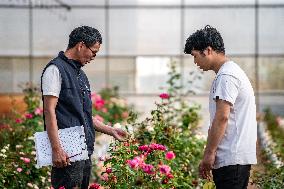
(231028) -- KUNMING, Oct. 28, 2023 (Xinhua) -- Tian Liantong (L) talks with his colleague at a roses plantation demonstration garden of a modern agricultural park in Anning City, southwest China's Yunnan Province on Oct. 20, 2023. In August of 2022, over 8,000 flower seeds arrived at Yunnan Jinke Flower Engineering Research Center Co., Ltd. after their spaceflight trip aboard Shenzhou manned spaceship. Space breeding refers to exposing seeds or strains to cosmic radiation and microgravity in space to mutate their genes, so as to create new species or varieties with greater performances like shorter growth periods, higher yield and better resistance to diseases. According to Tian Liantong, a technologist of Jinke Flower Engineering Research Center Co., Ltd., usually it takes five years to breed new flower species which consumers could buy on market, and some species even need ten years to go through the process from breeding to becoming commodity, as they have to pass various and harsh growth conditions

  •  
CHINA-YUNNAN-SPACE BREEDING-NEW FLOWER SPECIES (CN)

CHINA-YUNNAN-SPACE BREEDING-NEW FLOWER SPECIES (CN)

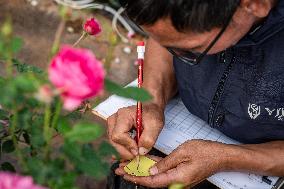
(231028) -- KUNMING, Oct. 28, 2023 (Xinhua) -- Tian Liantong takes notes of the condition of roses at a roses plantation demonstration garden of a modern agricultural park in Anning City, southwest China's Yunnan Province on Oct. 20, 2023. In August of 2022, over 8,000 flower seeds arrived at Yunnan Jinke Flower Engineering Research Center Co., Ltd. after their spaceflight trip aboard Shenzhou manned spaceship. Space breeding refers to exposing seeds or strains to cosmic radiation and microgravity in space to mutate their genes, so as to create new species or varieties with greater performances like shorter growth periods, higher yield and better resistance to diseases. According to Tian Liantong, a technologist of Jinke Flower Engineering Research Center Co., Ltd., usually it takes five years to breed new flower species which consumers could buy on market, and some species even need ten years to go through the process from breeding to becoming commodity, as they have to pass various and harsh growth c

  •  
CHINA-YUNNAN-SPACE BREEDING-NEW FLOWER SPECIES (CN)

CHINA-YUNNAN-SPACE BREEDING-NEW FLOWER SPECIES (CN)

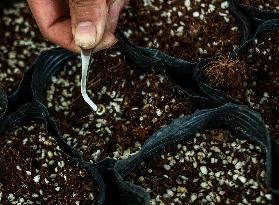
(231028) -- KUNMING, Oct. 28, 2023 (Xinhua) -- Tian Liantong breeds seeds brought back from space at a lab in Anning City, southwest China's Yunnan Province on April 3, 2023. In August of 2022, over 8,000 flower seeds arrived at Yunnan Jinke Flower Engineering Research Center Co., Ltd. after their spaceflight trip aboard Shenzhou manned spaceship. Space breeding refers to exposing seeds or strains to cosmic radiation and microgravity in space to mutate their genes, so as to create new species or varieties with greater performances like shorter growth periods, higher yield and better resistance to diseases. According to Tian Liantong, a technologist of Jinke Flower Engineering Research Center Co., Ltd., usually it takes five years to breed new flower species which consumers could buy on market, and some species even need ten years to go through the process from breeding to becoming commodity, as they have to pass various and harsh growth conditions including temperature, humidity and nutrition supply.

  •  
CHINA-YUNNAN-SPACE BREEDING-NEW FLOWER SPECIES (CN)

CHINA-YUNNAN-SPACE BREEDING-NEW FLOWER SPECIES (CN)

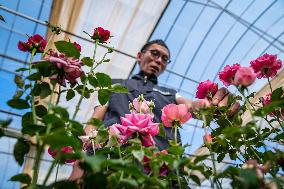
(231028) -- KUNMING, Oct. 28, 2023 (Xinhua) -- Tian Liantong checks roses at a roses plantation demonstration garden of a modern agricultural park in Anning City, southwest China's Yunnan Province on Oct. 20, 2023. In August of 2022, over 8,000 flower seeds arrived at Yunnan Jinke Flower Engineering Research Center Co., Ltd. after their spaceflight trip aboard Shenzhou manned spaceship. Space breeding refers to exposing seeds or strains to cosmic radiation and microgravity in space to mutate their genes, so as to create new species or varieties with greater performances like shorter growth periods, higher yield and better resistance to diseases. According to Tian Liantong, a technologist of Jinke Flower Engineering Research Center Co., Ltd., usually it takes five years to breed new flower species which consumers could buy on market, and some species even need ten years to go through the process from breeding to becoming commodity, as they have to pass various and harsh growth conditions including tempe

  •  
CHINA-YUNNAN-SPACE BREEDING-NEW FLOWER SPECIES (CN)

CHINA-YUNNAN-SPACE BREEDING-NEW FLOWER SPECIES (CN)

(231028) -- KUNMING, Oct. 28, 2023 (Xinhua) -- Tian Liantong takes notes of the serial numbers of roses at a roses plantation demonstration garden of a modern agricultural park in Anning City, southwest China's Yunnan Province on Oct. 20, 2023. In August of 2022, over 8,000 flower seeds arrived at Yunnan Jinke Flower Engineering Research Center Co., Ltd. after their spaceflight trip aboard Shenzhou manned spaceship. Space breeding refers to exposing seeds or strains to cosmic radiation and microgravity in space to mutate their genes, so as to create new species or varieties with greater performances like shorter growth periods, higher yield and better resistance to diseases. According to Tian Liantong, a technologist of Jinke Flower Engineering Research Center Co., Ltd., usually it takes five years to breed new flower species which consumers could buy on market, and some species even need ten years to go through the process from breeding to becoming commodity, as they have to pass various and harsh gro

  •  
CHINA-YUNNAN-SPACE BREEDING-NEW FLOWER SPECIES (CN)

CHINA-YUNNAN-SPACE BREEDING-NEW FLOWER SPECIES (CN)

(231028) -- KUNMING, Oct. 28, 2023 (Xinhua) -- Tian Liantong checks roses at a roses plantation demonstration garden of a modern agricultural park in Anning City, southwest China's Yunnan Province on Oct. 20, 2023. In August of 2022, over 8,000 flower seeds arrived at Yunnan Jinke Flower Engineering Research Center Co., Ltd. after their spaceflight trip aboard Shenzhou manned spaceship. Space breeding refers to exposing seeds or strains to cosmic radiation and microgravity in space to mutate their genes, so as to create new species or varieties with greater performances like shorter growth periods, higher yield and better resistance to diseases. According to Tian Liantong, a technologist of Jinke Flower Engineering Research Center Co., Ltd., usually it takes five years to breed new flower species which consumers could buy on market, and some species even need ten years to go through the process from breeding to becoming commodity, as they have to pass various and harsh growth conditions including tempe

  •  
CHINA-YUNNAN-SPACE BREEDING-NEW FLOWER SPECIES (CN)

CHINA-YUNNAN-SPACE BREEDING-NEW FLOWER SPECIES (CN)

(231028) -- KUNMING, Oct. 28, 2023 (Xinhua) -- Tian Liantong takes pictures of roses at a roses plantation demonstration garden of a modern agricultural park in Anning City, southwest China's Yunnan Province on Oct. 20, 2023. In August of 2022, over 8,000 flower seeds arrived at Yunnan Jinke Flower Engineering Research Center Co., Ltd. after their spaceflight trip aboard Shenzhou manned spaceship. Space breeding refers to exposing seeds or strains to cosmic radiation and microgravity in space to mutate their genes, so as to create new species or varieties with greater performances like shorter growth periods, higher yield and better resistance to diseases. According to Tian Liantong, a technologist of Jinke Flower Engineering Research Center Co., Ltd., usually it takes five years to breed new flower species which consumers could buy on market, and some species even need ten years to go through the process from breeding to becoming commodity, as they have to pass various and harsh growth conditions incl

  •  
CHINA-YUNNAN-SPACE BREEDING-NEW FLOWER SPECIES (CN)

CHINA-YUNNAN-SPACE BREEDING-NEW FLOWER SPECIES (CN)

(231028) -- KUNMING, Oct. 28, 2023 (Xinhua) -- Tian Liantong (L) trims rose sprays at a roses plantation demonstration garden of a modern agricultural park in Anning City, southwest China's Yunnan Province on Oct. 20, 2023. In August of 2022, over 8,000 flower seeds arrived at Yunnan Jinke Flower Engineering Research Center Co., Ltd. after their spaceflight trip aboard Shenzhou manned spaceship. Space breeding refers to exposing seeds or strains to cosmic radiation and microgravity in space to mutate their genes, so as to create new species or varieties with greater performances like shorter growth periods, higher yield and better resistance to diseases. According to Tian Liantong, a technologist of Jinke Flower Engineering Research Center Co., Ltd., usually it takes five years to breed new flower species which consumers could buy on market, and some species even need ten years to go through the process from breeding to becoming commodity, as they have to pass various and harsh growth conditions includ

  •  
CHINA-YUNNAN-SPACE BREEDING-NEW FLOWER SPECIES (CN)

CHINA-YUNNAN-SPACE BREEDING-NEW FLOWER SPECIES (CN)

(231028) -- KUNMING, Oct. 28, 2023 (Xinhua) -- This photo taken on Oct. 20, 2023 shows blooming roses at a roses plantation demonstration garden of a modern agricultural park in Anning City, southwest China's Yunnan Province. In August of 2022, over 8,000 flower seeds arrived at Yunnan Jinke Flower Engineering Research Center Co., Ltd. after their spaceflight trip aboard Shenzhou manned spaceship. Space breeding refers to exposing seeds or strains to cosmic radiation and microgravity in space to mutate their genes, so as to create new species or varieties with greater performances like shorter growth periods, higher yield and better resistance to diseases. According to Tian Liantong, a technologist of Jinke Flower Engineering Research Center Co., Ltd., usually it takes five years to breed new flower species which consumers could buy on market, and some species even need ten years to go through the process from breeding to becoming commodity, as they have to pass various and harsh growth conditions incl

  •  
CHINA-YUNNAN-SPACE BREEDING-NEW FLOWER SPECIES (CN)

CHINA-YUNNAN-SPACE BREEDING-NEW FLOWER SPECIES (CN)

(231028) -- KUNMING, Oct. 28, 2023 (Xinhua) -- This combined photo shows new species of roses at a roses plantation demonstration garden of a modern agricultural park in Anning City, southwest China's Yunnan Province. In August of 2022, over 8,000 flower seeds arrived at Yunnan Jinke Flower Engineering Research Center Co., Ltd. after their spaceflight trip aboard Shenzhou manned spaceship. Space breeding refers to exposing seeds or strains to cosmic radiation and microgravity in space to mutate their genes, so as to create new species or varieties with greater performances like shorter growth periods, higher yield and better resistance to diseases. According to Tian Liantong, a technologist of Jinke Flower Engineering Research Center Co., Ltd., usually it takes five years to breed new flower species which consumers could buy on market, and some species even need ten years to go through the process from breeding to becoming commodity, as they have to pass various and harsh growth conditions including te

  •  
CHINA-YUNNAN-SPACE BREEDING-NEW FLOWER SPECIES (CN)

CHINA-YUNNAN-SPACE BREEDING-NEW FLOWER SPECIES (CN)

(231028) -- KUNMING, Oct. 28, 2023 (Xinhua) -- This photo taken on April 3, 2023 shows germinated seeds brought back from space at Yunnan Jinke Flower Engineering Research Center Co., Ltd. in Anning City, southwest China's Yunnan Province. In August of 2022, over 8,000 flower seeds arrived at Yunnan Jinke Flower Engineering Research Center Co., Ltd. after their spaceflight trip aboard Shenzhou manned spaceship. Space breeding refers to exposing seeds or strains to cosmic radiation and microgravity in space to mutate their genes, so as to create new species or varieties with greater performances like shorter growth periods, higher yield and better resistance to diseases. According to Tian Liantong, a technologist of Jinke Flower Engineering Research Center Co., Ltd., usually it takes five years to breed new flower species which consumers could buy on market, and some species even need ten years to go through the process from breeding to becoming commodity, as they have to pass various and harsh growth c

  • Main
  • Top
  • Editorial
  • Creative
  • About Us
  • About ILG
  • Terms of use
  • Company
  • BEHIND
  • Price List
  • Single Plan
  • Monthly Plan
  • Services
  • Shooting
  • Rights Clearance
  • Support
  • FAQ
  • How To Buy
  • Contact Us
  • Become a Partner

© KYODO NEWS IMAGES INC

All Rights Reserved.

  • Editorial
  • Olympics
  • News
  • Sports
  • Japan
  • Tech
  • Royal
  • Disaster
  • NorthKorea
  • Old Japan
  • SNS
  • Creative
  • Food
  • Japan
  • Landscape
  • Animal
  • Popular
  • #Ukraine
  • #China
  • #coronavirus
  • #N. Korea
  • #Russia
  • #Thailand
  • #Ukraine
  • #China
  • #coronavirus
  • #N. Korea
  • #Russia
  • #Thailand
  • Food
  • Japan
  • Landscape
  • Animal
  • Olympics
  • News
  • Sports
  • Japan
  • Tech
  • Royal
  • Disaster
  • NorthKorea
  • Old Japan
  • SNS